

HMRC pressure is one of the most common reasons directors get in touch with us. Often it starts quietly – a VAT payment you plan to catch up on, a PAYE bill you hope to clear once cash comes in – and then suddenly it feels urgent.
If you can’t pay HMRC, you’re not alone. Many otherwise well-run businesses find themselves in this position at some point. What usually makes the biggest difference is how early you act and how you approach the situation.
This guide explains what HMRC pressure typically looks like, what happens if nothing is done, and how Time To Pay arrangements work in practice.
What HMRC pressure usually looks like
For most businesses, HMRC pressure follows a familiar pattern:
- missed VAT or PAYE payments
- reminder letters and statements
- warnings about interest, penalties or surcharges
- requests to make contact or settle the balance
Missed tax payments are often one of several early indicators that a business is under strain. Understanding the warning signs of insolvency can help directors recognise pressure sooner and act while more options are available.
At this stage, HMRC is usually open to discussion. The difficulty is that stress and uncertainty often lead to delay.
What happens if you ignore HMRC
Ignoring HMRC rarely buys time. In most cases, it has the opposite effect.
If HMRC doesn’t hear from you, they may:
- withdraw any informal flexibility
- demand full payment
- begin enforcement action
- escalate matters towards formal recovery
This is often the point where pressure feels overwhelming. By then, some of the earlier and more flexible options may already have fallen away.
Early contact almost always leads to better conversations and better outcomes.
What is a Time To Pay arrangement?
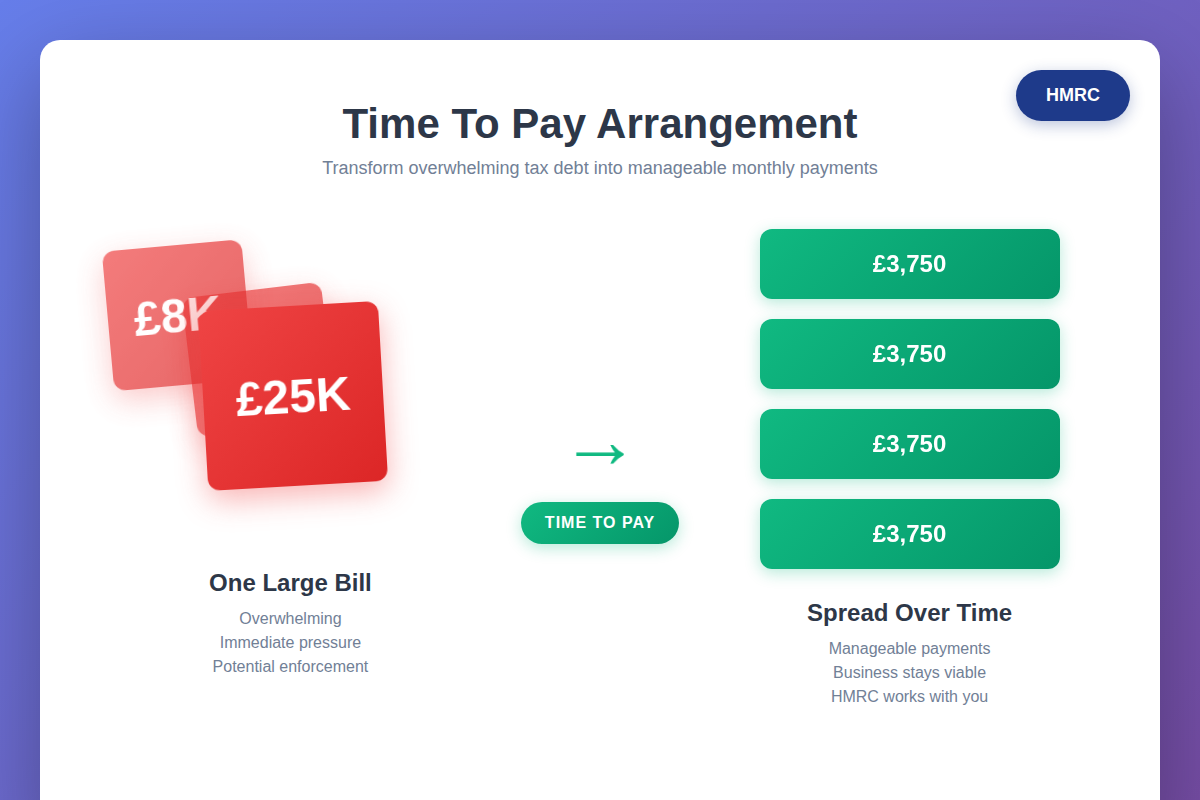
A Time To Pay (TTP) arrangement is an agreement with HMRC to spread tax arrears over a period of time rather than paying everything at once.
It can apply to:
- VAT
- PAYE
- Corporation Tax
- other business tax liabilities
Time To Pay is not automatic. HMRC will only agree if they believe the business can realistically afford the repayments and keep future tax payments up to date.
What HMRC will want to see
When considering a Time To Pay proposal, HMRC typically looks for:
- up-to-date figures
- a clear explanation of how the arrears arose
- evidence the business is viable
- confidence that future tax payments will be made on time
- a proposal that feels realistic, not optimistic
Over-promising is one of the most common reasons arrangements fail. A modest, affordable proposal is far more likely to be accepted than one that depends on everything going right.
Common mistakes we see
Directors often run into difficulty by:
- contacting HMRC without a clear view of the numbers
- proposing repayments that rely on hoped-for improvements
- missing future tax payments while on a Time To Pay arrangement
- treating HMRC in isolation when wider cashflow pressure exists
A Time To Pay arrangement can help, but it doesn’t fix underlying issues on its own.
When Time To Pay may not be the right answer
In some situations, a Time To Pay arrangement simply delays a bigger problem. This is often the case where:
- tax arrears continue to increase
- future VAT or PAYE payments are already at risk
- cashflow remains under constant pressure
- other creditors are also tightening or chasing
In these circumstances, it’s important to step back and look at the wider picture rather than focusing solely on HMRC.
What to do if you can’t pay HMRC
If HMRC pressure is building, a sensible approach is to:
1. Get clear on the numbers
Know exactly what is owed, when it’s due, and what future liabilities are coming.
2. Be honest about affordability
Short-term relief that creates longer-term failure rarely helps.
3. Speak to someone experienced and independent early
Many directors worry that speaking to an insolvency practitioner automatically means formal insolvency. That isn’t the case. Our guide on do you need an insolvency practitioner? explains when it’s simply about understanding your position.
4. Act before matters escalate
Timing often makes more difference than directors realise.
A final reassurance
HMRC pressure can feel personal, but it isn’t. HMRC’s focus is recovery, not punishment. Clear communication and early action usually lead to more constructive outcomes.
If you’re struggling to pay tax, getting advice does not commit you to any particular route. It simply gives you clarity and helps you decide the right next step – whether that’s a Time To Pay arrangement, restructuring, or something else entirely.